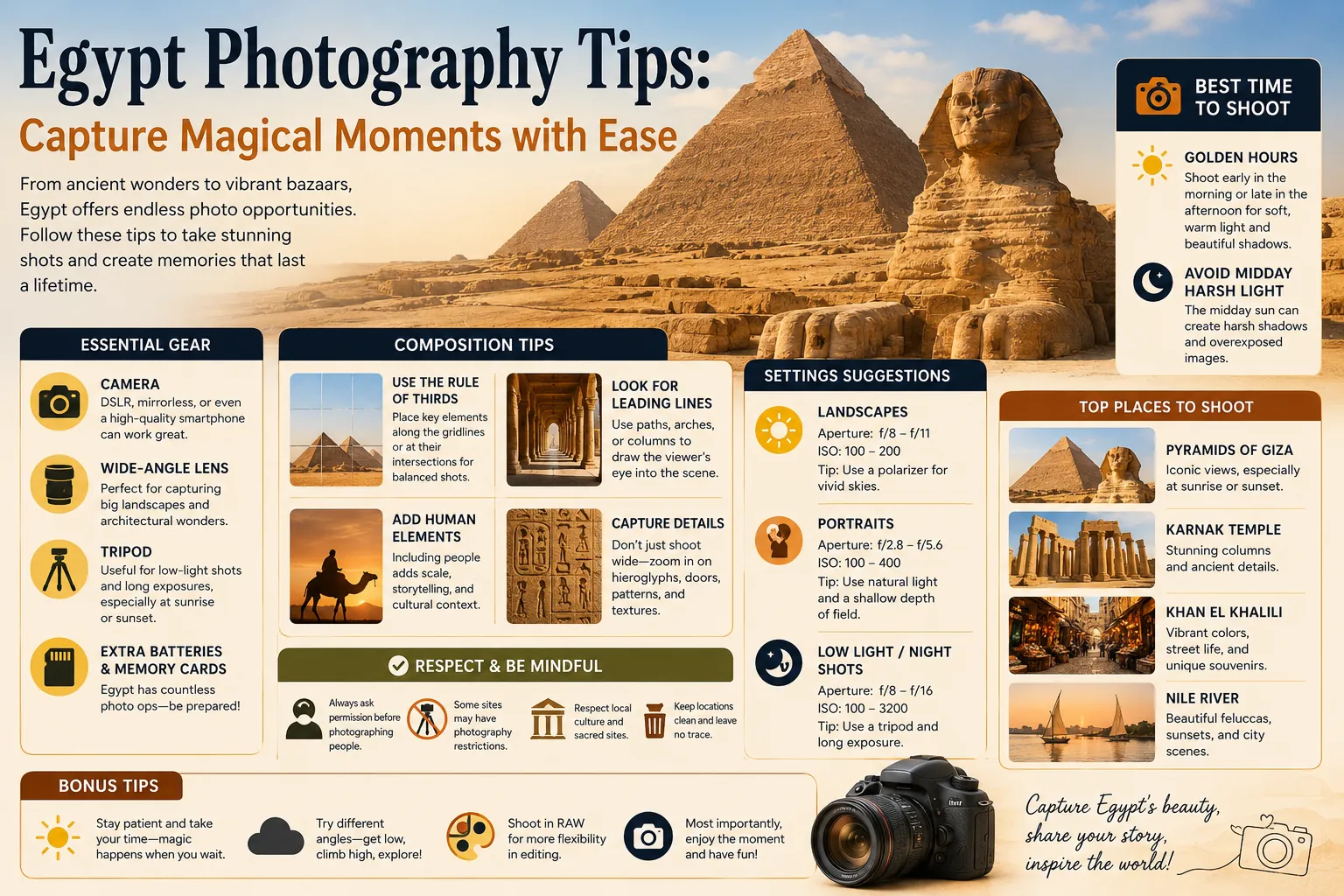
If you’re dreaming about an unforgettable adventure to the land of pharaohs, then mastering some key Egypt photography tips will make your trip truly magical. Egypt, with its ancient monuments, vibrant markets, mesmerizing deserts, and mysterious tombs, offers a breathtaking playground for photographers of all skill levels. In this complete guide, we’ll help you discover the best camera gear, practical tips, and techniques to capture Egypt’s wonders—so your travel photos tell a story as rich as the history you’ll explore.
How Should You Prepare for Photography in Egypt?
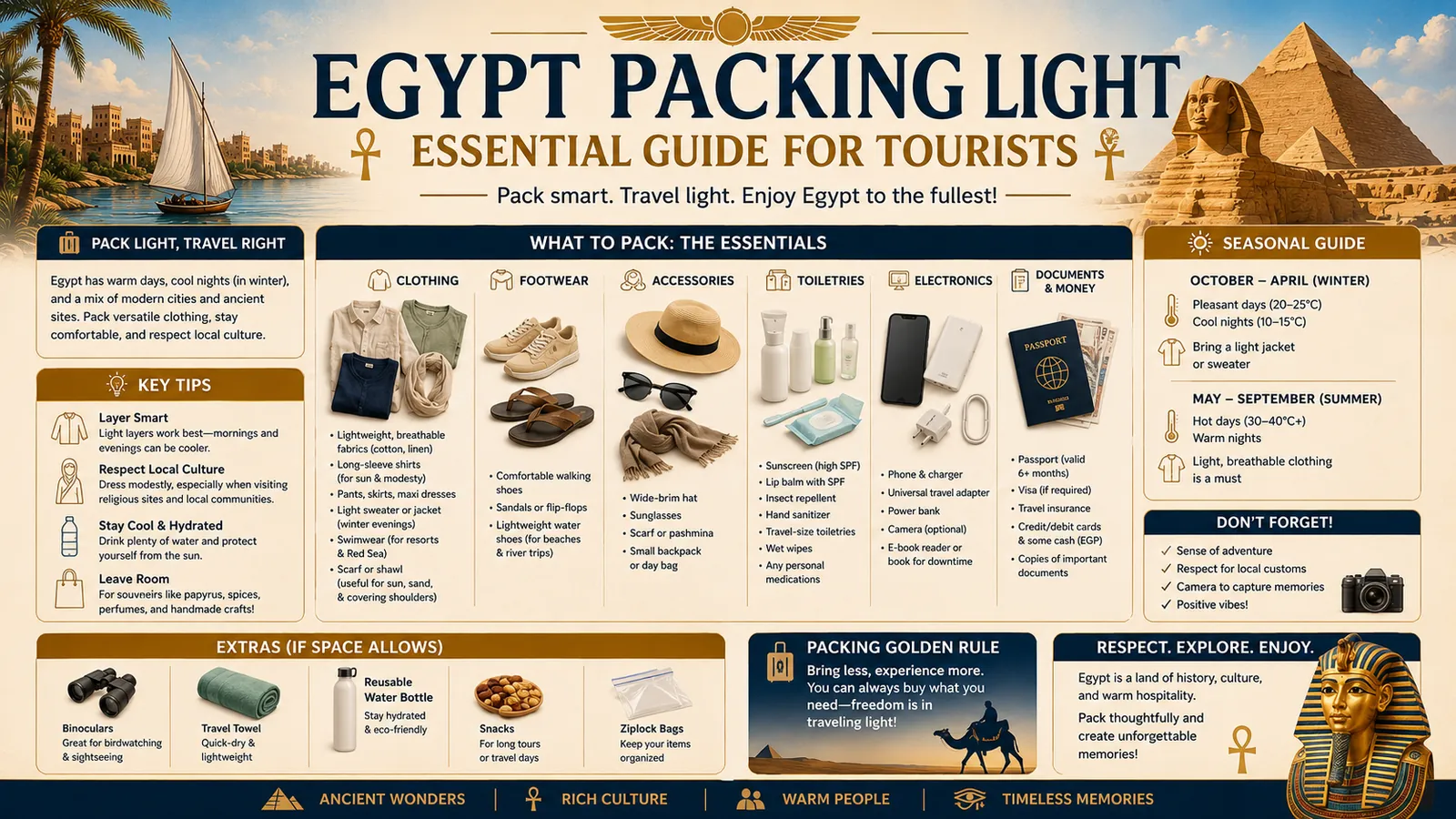
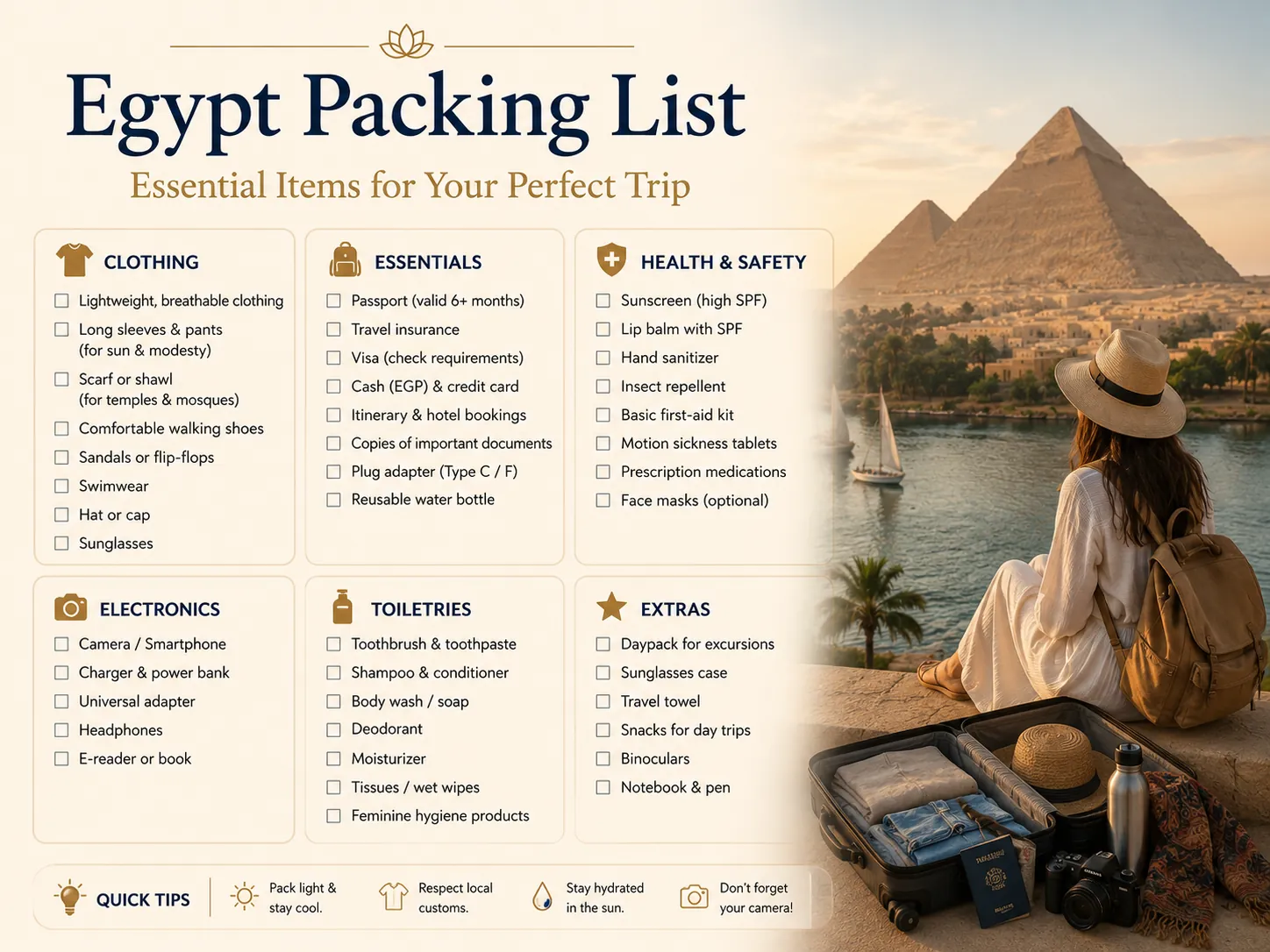
Check the photography rules for each site before you go, since some tombs and museums ban flash or cameras. Pack a light, versatile kit, extra memory cards and batteries, and a way to back up your images. Learning to ask 'Can I take a photo?' politely also helps with portraits.
Before you set foot in Egypt, a bit of thoughtful preparation goes a long way toward capturing dazzling photos. Keep these core tips in mind to make your trip smoother and your photography more rewarding.
- Research Photo Rules: Some sites restrict photography or don’t allow flash. Always check the latest guidelines for temples and tombs.
- Pack Light, Pack Smart: Consider versatile camera bodies and lenses. Lightweight gear helps you move quickly and comfortably in hot weather.
- Back Up Your Images: Bring extra memory cards and a portable hard drive or cloud solution. This ensures your memories are safe.
- Learn Basic Arabic Phrases: Polite greetings or asking “Can I take a photo?” goes a long way toward connecting with locals.
What Camera Gear Should You Bring to Egypt?
A lightweight mirrorless camera with a wide-angle lens (around 16–35mm) and a mid-range zoom (24–70mm) covers most of Egypt, from temple interiors to street scenes. Add a polarizing filter for bright skies, spare batteries, a lens-cleaning kit for the dust and, for night shots, a compact tripod — though many archaeological sites don't allow tripods without a permit.
Choosing the right camera gear influences the outcome of your travel photography. Here’s the ideal kit that balances quality, flexibility, and convenience—whether you’re a pro or a passionate hobbyist.
Camera Body
Mirrorless cameras and compact DSLRs are perfect for Egypt’s often-crowded sites. They’re lightweight, unobtrusive, and deliver fantastic quality. Consider weather-sealed options if you’ll be shooting in the sand or near the Nile.
Lenses to Pack
- Wide-Angle (14-24mm or 16-35mm): Capture dramatic interiors of temples, towering pyramids, and sweeping desert landscapes.
- Mid-Range Zoom (24-70mm): Provides flexibility for streets, portraits, and quick compositions across sites.
- Telephoto (70-200mm): Perfect for candid market shots and details of distant hieroglyphics from restricted areas.
- Prime Lens (35mm or 50mm): Sharp, bright, and great for evening street scenes or portraits.
Must-Have Accessories
- Polarizing Filter: Cuts glare and makes blue skies pop in desert and Nile scenes.
- Lightweight Tripod: Crucial for low-light tombs, night shots, and time-lapse images.
- Lens Cleaning Kit: Sand and dust are ever-present—keep your lenses spotless.
- Extra Batteries: Desert heat drains batteries faster than you might expect.
Travel-Friendly Photography Backpacks
Use a padded, anti-theft backpack to protect your camera gear as you move from bustling Cairo to the Valley of the Kings. Choose backpacks with easy-access compartments and rain covers for extra security and peace of mind.
How Do You Photograph Egypt's Pyramids, Temples and Tombs?
Shoot the pyramids and temples early in the morning or late in the afternoon, when the light is soft, shadows are long and crowds are thinner. Include people or camels for scale, use high ISO rather than flash inside temples and tombs, and follow the local rules, since some tombs restrict photography.
Egypt’s legendary monuments make for jaw-dropping photographs—but timing and approach matter. These Egypt photography tips will help you frame the magic, avoid crowds, and bring your shots to life.
Shooting the Pyramids of Giza
- Arrive Early or Stay Late: Beat the crowds and capture glorious golden-hour light.
- Creative Angles: Try wide shots, frame details through ancient stone doorways, or play with visitors’ silhouettes for artistic effects.
- Include a Camel or Local Guide: Adding people and animals provides scale and a sense of journey.
Because our Giza Pyramids and Saqqara tour is private, you can plan the timing with your guide to catch softer light on the plateau and quieter moments at the Step Pyramid.
Temple Photography: Luxor, Karnak, and Abu Simbel
- Mind the Sun: Early morning or late afternoon yields vibrant colors and long shadows, perfect for dramatic columns and hieroglyphics.
- Use a Tripod Indoors: Interior murals and statues often need long exposures due to low light.
- Respect Restrictions: Some interiors prohibit cameras—always ask before clicking.
At Abu Simbel, the temples face east toward the rising sun, so early-morning light is best for the colossal statues of Ramses II.
Street & Market Photography
- Connect First: Greet subjects and build rapport, especially in the bustling Khan el-Khalili market.
- Capture the Color: Focus on vibrant spices, woven textiles, and energetic shopkeepers. Use a wide aperture for beautiful background blur.
- Tell a Story: Look for environmental portraits—a craftsman at work or families navigating market chaos.
Desert Landscapes
- Golden Hour Magic: Sunrise and sunset bathe the Sahara and White Desert in irresistible, soft light.
- Use Foregrounds: Frame sand dunes with rocks, palms, or camels for added depth and scale.
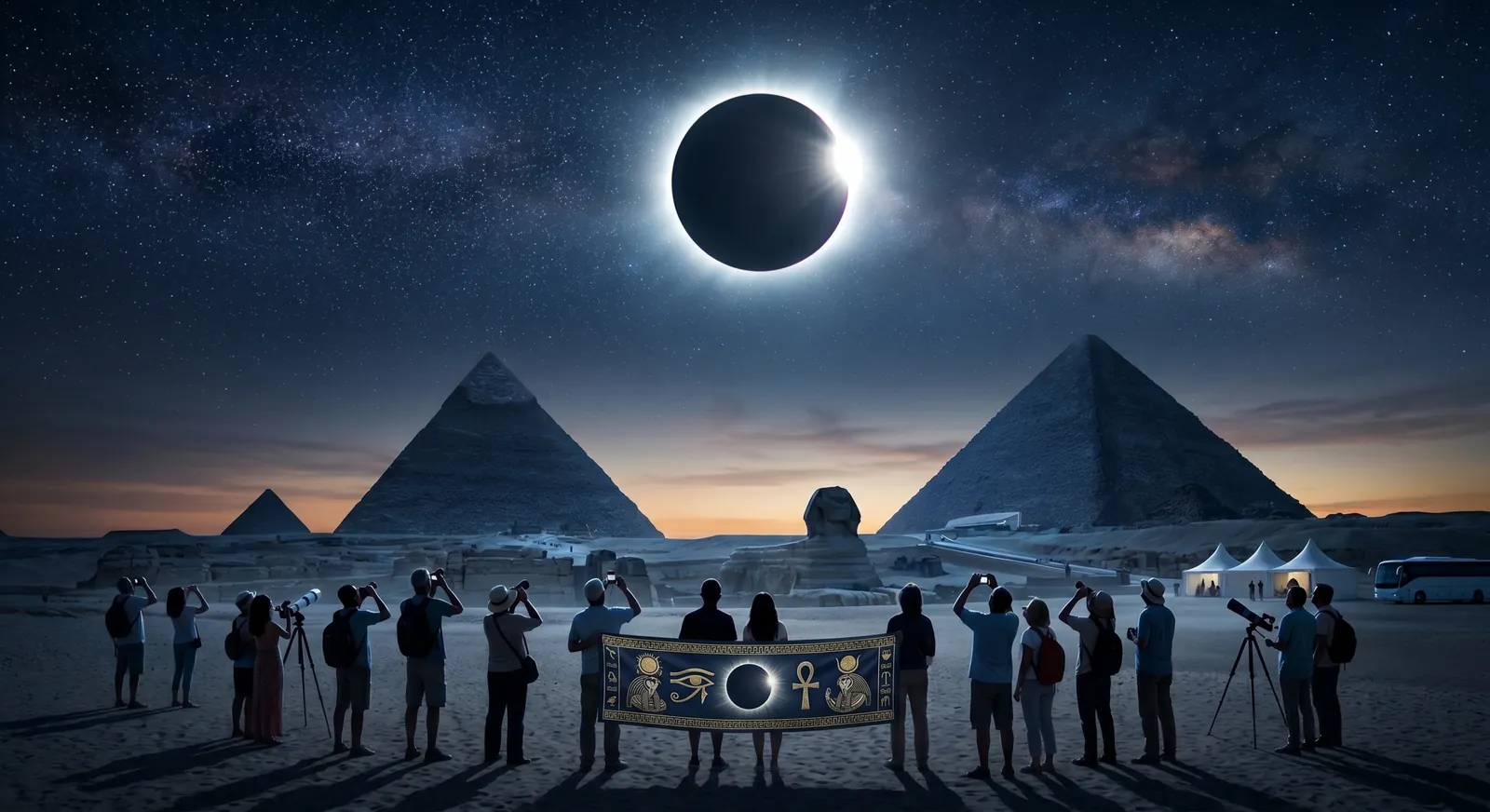
- Night Skies: The remote deserts offer world-class stargazing—bring a tripod for unforgettable Milky Way shots.
Tomb Photography (Where Allowed)
- No Flash: Flash damages wall paintings and is almost always forbidden. Use high ISO settings and a steady hand or tripod.
- Capture Details: Zoom in on fantastical gods, colors, and inscriptions—these tell the tomb’s real story.
- Be Respectful: Always follow local guidance and restrictions; some tombs now ban photography entirely to preserve their art.
What Photography Etiquette Should You Follow in Egypt?
Always ask before photographing people, especially women, children and residents of rural areas, and accept a polite no. Never photograph military sites, police or government buildings, follow the posted rules at monuments, and keep your camera on a strap in crowded places to protect it from theft.
A successful photography trip to Egypt depends not only on gear and skills but also on how you interact with people and sites. Here’s how to photograph ethically and stay safe.
- Ask Permission: Always seek consent before photographing local people, especially in rural areas or religious spaces.
- Respect Site Rules: Honor all guidelines and posted signs—even if it means missing a shot. Better to savor the moment than risk fines or confiscation.
- Protect Your Gear: Crowded attractions can attract pickpockets. Keep cameras close, use straps, and avoid flaunting expensive gear in busy streets.
How Can You Take Better Travel Photos in Egypt?
For standout photos, look for reflections of temples and city lights in the Nile, use the deep shadows of columns and doorways to frame your subject, and explore side streets and quiet corners away from the main viewpoints. Sunrise and sunset over the desert give the warmest, most dramatic light.
Ready to elevate your travel photos from snapshots to works of art? Use these advanced Egypt photography tips to stand out from the crowd.
- Leverage Reflections: Photograph temples across the Nile or capture city lights mirrored in water at night for extra drama.
- Experiment with Shadows: Ancient structures cast intricate shadows—use these to add dimension and mystery.
- Find the Unseen: Explore side streets, hidden courtyards, and quiet desert spots for unique perspectives and authentic moments.
For aerial shots, nothing beats a sunrise Luxor hot air balloon flight over the Valley of the Kings, the Temple of Hatshepsut and the green fields along the Nile.
FAQ: Egypt Photography Tips and Common Questions
- Can I use drones for photography in Egypt?
Drones are tightly regulated and mostly prohibited in Egypt, especially near heritage sites. Research the latest rules and obtain any necessary permits before traveling. - Is it safe to photograph people in Egypt?
Egypt is generally welcoming, but always ask permission first, show your appreciation, and respect anyone who declines. Avoid military, police, and government buildings. - What’s the best time of year to visit for photography?
October through April offers cooler temperatures and clear skies—perfect for vivid landscapes and comfortable photography sessions. - What camera settings work best inside tombs?
Use wide apertures, high ISO, and a steady hand (or tripod). Never use flash, and be conscious of the no-photography rules in certain tombs.
Conclusion: Egypt Photography Tips for Unforgettable Adventures
With the right camera kit, respectful approach, and a dash of creativity, anyone can bring home unforgettable images from the heart of Egypt. The real secret to stunning travel photos? Embrace the moment, connect with the land and its people, and trust in your unique perspective. Let these Egypt photography tips inspire your adventures, ensuring you return home with a portfolio—and memories—that truly capture the magic of this ancient, enchanting land. Happy shooting and safe travels!