When most travelers think of Egypt, the majestic Pyramids of Giza, the enigmatic Sphinx, and bustling Cairo come to mind. But a journey to Siwa Oasis Egypt unveils a mesmerizing side to the country that remains blissfully untouched by mass tourism. Nestled deep in the Western Desert, Siwa—along with the fascinating Bahariya and Fayoum oases—offers intrepid explorers a world of lush palm groves, crystalline springs, surreal landscapes, and ancient traditions. If you’re searching for authentic experiences and once-in-a-lifetime adventures, Egypt’s hidden oases are yours to discover.
Why Visit Siwa Oasis in Egypt?
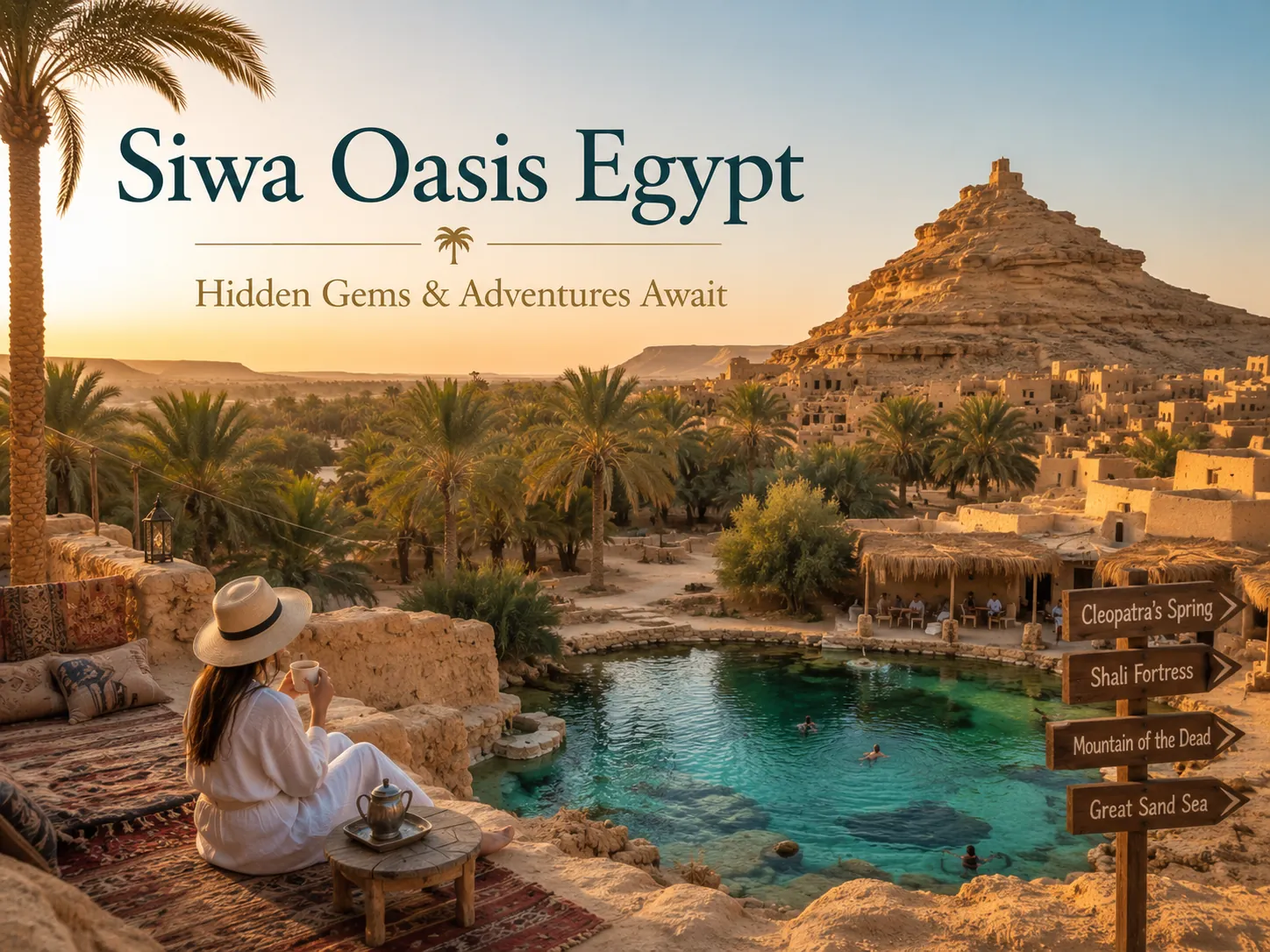
Siwa is Egypt's most remote and distinctive oasis, far out in the Western Desert near the Libyan border. Visitors come for its palm groves and salt lakes, the ruins of the Temple of the Oracle that Alexander the Great consulted, Berber culture, hot springs and adventures in the dunes of the Great Sand Sea.
Siwa Oasis Egypt charms visitors with its spectacular natural beauty, unique culture, and genuine hospitality. Whether you dream of immersing yourself in a tranquil setting, exploring ancient ruins, or indulging in wellness rituals, Siwa delivers endless delights. Here are just some reasons why Siwa Oasis belongs on every adventurer’s bucket list:
- Remote Tranquility: Located 560 km from Cairo, Siwa feels worlds away from the city’s hustle, surrounded by the Great Sand Sea and palm groves.
- Rich History: Once a vital node on ancient trade routes, Siwa houses archaeological wonders dating back to the time of Alexander the Great.
- Unique Berber Culture: The Siwan people maintain their own language, traditions, and artisanal crafts, offering authentic interactions.
- Desert Adventures: Sandboarding, 4×4 safaris, and star-gazing await at every turn.
- Wellness Escapes: Soak in natural hot springs or luxuriate in rejuvenating mud baths amidst palm-dotted landscapes.
How Do You Get to Siwa Oasis?
Siwa is usually reached by road. Most travelers drive or take a bus from Cairo or Alexandria via Marsa Matrouh on the Mediterranean coast; from Cairo the journey takes a long day, around 10 to 12 hours by bus. The nearest airport is at Marsa Matrouh. A private car or organized tour is the most comfortable option.
Planning your escape to Siwa Oasis Egypt? While it’s remote, getting there is an adventure in itself:
- By Bus or Car: Buses from Cairo run once daily, taking about 12 hours. For more flexibility, hire a private car or join a guided tour.
- From Alexandria: Regular buses take you through Marsa Matrouh to Siwa.
- By Air: The nearest airport is in Marsa Matrouh. From there, it’s a 4-hour road journey to the oasis.
Whichever route you choose, the journey through the Western Desert’s endless horizons and dramatic dunes becomes a vital part of your adventure.
Since most Siwa trips start and end in Cairo, it is worth adding a few days in the capital, for example with our private 4-day Cairo tour package, which covers the Giza pyramids, Saqqara and Old Cairo.
What Are the Must-See Sights in Siwa Oasis?
Siwa's must-see sights are the Temple of the Oracle, where Alexander the Great sought the god Amun's blessing; the mud-brick Shali Fortress at the heart of town; Cleopatra's Pool for a cool swim; the salt lakes, where you float effortlessly; and the dunes of the Great Sand Sea for 4x4 safaris and sandboarding.
The Temple of the Oracle
Legend whispers that Alexander the Great sought guidance here, believing the temple priests could predict his destiny. Roam the evocative ruins and imagine ancient pilgrims making the same journey centuries ago.
Shali Fortress
This centuries-old mud-brick citadel stands at the heart of Siwa town. Climb its winding passageways for panoramic views of palm groves and shimmering lakes, especially enchanting at sunset.
Cleopatra’s Pool
Take a dip in the legendary spring where Cleopatra herself is said to have bathed. The crystal-clear water stays refreshingly cool, making it the perfect spot to relax after a day of exploration.
Siwa Salt Lakes
Glistening with ethereal blues and whites, Siwa’s salt lakes are a photographer’s dream. Their high mineral content allows swimmers to float effortlessly in this magical setting.
Great Sand Sea
Unleash your inner adventurer as you race across enormous dunes, ride camels under the desert sky, or try your hand at sandboarding. A 4×4 safari across this wild landscape offers thrilling surprises at every turn.
What Is Siwan Culture Like?
Siwa has its own Berber (Amazigh) culture, distinct from the rest of Egypt. Siwans speak their own language, Siwi, alongside Arabic, and are known for fine embroidery, silver jewelry, palm-frond baskets and some of Egypt's best dates and olives. Staying in an eco-lodge or joining a local guide is the best way to experience it.
Meet the Siwan Berber Community
Siwa’s indigenous Berber population maintains age-old traditions, crafts, and cuisine. The locals’ warm hospitality, distinctive dress, and fascinating dialect make every interaction meaningful.
Sample Siwan Cuisine
- Fatta: Hearty meat and rice layered with crisp bread.
- Dates and Olives: The region produces some of Egypt’s finest.
- Fresh Palm Wine: A Siwan specialty offered at celebratory feasts.
- Pigeon: Roasted or stuffed, it’s a true local delicacy.
Don’t miss an evening of Siwan music and traditional dancing under a blanket of stars—the soul of the oasis comes alive in its songs and rhythms.
Siwan Handicrafts
Shop for authentic Siwan crafts, including embroidered shawls, palm-frond baskets, silver jewelry, and ceramics. Supporting these artisans not only brings home unique souvenirs, but also preserves ancient skills for future generations.
Which Other Oases Are Worth Visiting in Egypt?
Beyond Siwa, Bahariya Oasis is the gateway to the Black Desert and the chalk formations of the White Desert, with hot springs and the Valley of the Golden Mummies. Fayoum, about two hours from Cairo, offers Wadi El Rayan's waterfalls, the Wadi Al-Hitan whale fossils and the pottery village of Tunis.
Bahariya Oasis: Gateway to the Black and White Desert
Just a few hours from Cairo, Bahariya offers a world of contrasts—verdant gardens surrounded by surreal volcanic landscapes. It’s also the starting point for expeditions into the Black Desert and the White Desert, two of Egypt’s most striking natural wonders.
- Marvel at the fossilized trees and glassy black pebbles of the Black Desert.
- Venture into the ghostly formations of chalk towers and mushroom rocks in the White Desert National Park.
- Soak in Bahariya’s natural hot springs for a therapeutic treat after a day of trekking.
- Explore the “Valley of the Golden Mummies,” an ancient necropolis with hundreds of Greco-Roman era tombs.
Fayoum Oasis: Ancient Canals and Desert Magic
Just 90 km southwest of Cairo, Fayoum is a lush agricultural haven, famous for its massive lake, Meidum Pyramid, and wildlife. Here’s why you should add Fayoum to your itinerary:
- Wadi El Rayan: Home to Egypt’s only waterfalls, perfect for hiking and birdwatching.
- Magic Lake: Kayak, swim, or relax beside the turquoise waters set against golden dunes.
- Wadi Al-Hitan: Discover a prehistoric whale cemetery—a UNESCO World Heritage site where ancient sea fossils emerge from the sand.
- Tunis Village: Renowned for pottery workshops, art galleries, and a charming community feel.
Fayoum's Meidum Pyramid, one of Egypt's early attempts at a true pyramid, pairs well with our Saqqara, Memphis and Dahshur day trip, where the Bent and Red Pyramids show how the builders finally succeeded.
What Should You Know Before Visiting Siwa?
Visit Siwa between October and April, when days are pleasant and desert nights are cool. Carry enough cash in Egyptian pounds, as cards and ATMs are limited, dress modestly in this conservative community, and always ask before photographing people. Drink bottled water and pack warm layers for evenings in the desert.
- Best Time to Visit: October to April brings cooler days and pleasant nights.
- Visa Requirements: Most travelers need an Egyptian visa, easily obtained online or upon arrival at the airport.
- Currency: The Egyptian Pound (EGP) is widely used; carry some cash for rural areas.
- Language: Arabic is the official language, but English is commonly spoken in tourist areas.
- Health & Safety: Drink bottled water, pack sunscreen, and carry a first aid kit. The oases are safe, but always respect local customs.
- Local Etiquette: Dress modestly, especially in rural communities, and always ask before taking photos of people.
- Power Supply: Standard voltage is 220V, European two-pin plugs are common.
By planning ahead and respecting local traditions, you’ll make your trip both enjoyable and enriching.
Frequently Asked Questions about Siwa Oasis Egypt
Is Siwa Oasis Egypt safe for tourists?
Yes, Siwa is very safe for foreign tourists. The local community is friendly and welcoming. Standard precautions—such as not traveling alone in the desert at night—are recommended.
What is the best way to enjoy Siwa’s unique culture?
Stay with a local family or in an eco-lodge to experience Siwan hospitality. Join guided community tours or engage with artisans to learn about their crafts and traditions.
Can I visit Siwa Oasis Egypt independently, or should I join a tour?
Adventurous travelers can visit independently via bus or car. However, organized tours offer insightful guides, facilitate transport, and handle logistics, especially beneficial in remote areas.
How many days should I spend in Siwa?
A minimum of three days is recommended, allowing time for major sights, relaxation in hot springs, desert adventures, and cultural immersion.
Are there eco-friendly accommodations in Siwa Oasis Egypt?
Absolutely. Many eco-lodges utilize local materials and focus on sustainable tourism, such as Adrère Amellal and Taziry Ecolodge.
What should I pack for a Siwa adventure?
- Lightweight clothing for daytime, warm layers for the evening desert chill
- Sunscreen and a wide-brimmed hat
- Reusable water bottle
- Camera for those jaw-dropping landscapes
- Personal toiletries and any medication
Conclusion: Your Unforgettable Journey to Siwa Oasis Egypt
Egypt holds countless wonders beyond its famed pharaohs and pyramids. A journey to Siwa Oasis Egypt promises foreign travelers rich history, authentic culture, and exhilarating adventures across timeless deserts and magical palm groves. As you soak in medicinal springs, roam ancient ruins, and share stories under starlit skies, you’ll discover a hidden Egypt—a land of profound beauty and warm-hearted people. Include Siwa, Bahariya, and Fayoum on your next Egyptian adventure and return home with memories to last a lifetime.