
Tour Overview
Start your journey from Cairo and explore three of Egypt’s most important ancient sites in one day: Saqqara, Memphis, and Dahshur. This tour takes you beyond the famous Giza Pyramids to discover where pyramid building developed, from the Step Pyramid of King Djoser to the Bent Pyramid and the Red Pyramid of Dahshur.
The experience is ideal for travelers who want a deeper look at ancient Egyptian history, architecture, and royal burial traditions. With private transportation and a professional guide, you can explore these archaeological sites comfortably while learning how Egypt’s pyramid design evolved over centuries.
Tour Highlights
- Visit Saqqara, home of the Step Pyramid of King Djoser
- Explore the ancient capital of Memphis
- See the colossal statue of Ramses II
- View the famous Alabaster Sphinx of Memphis
- Discover Dahshur’s Bent Pyramid and Red Pyramid
- Learn how pyramid architecture developed before Giza
- Enjoy a private day trip from Cairo with flexible pickup and drop-off
Tour Route
Where the Pyramid Age Began
Most visitors to Cairo see Giza and leave. This tour shows what came before it. In roughly a century, Egypt's builders went from a stepped pyramid at Saqqara to the first true, smooth-sided pyramid at Dahshur, and every stop on this route is a step in that experiment. With your guide explaining each site in order, you finish the day understanding why the Great Pyramid looks the way it does.
The three sites lie close together south of Giza and are far quieter than the Giza plateau, so you can explore at an easy pace and take photographs without the crowds.
Saqqara: The Step Pyramid of Djoser
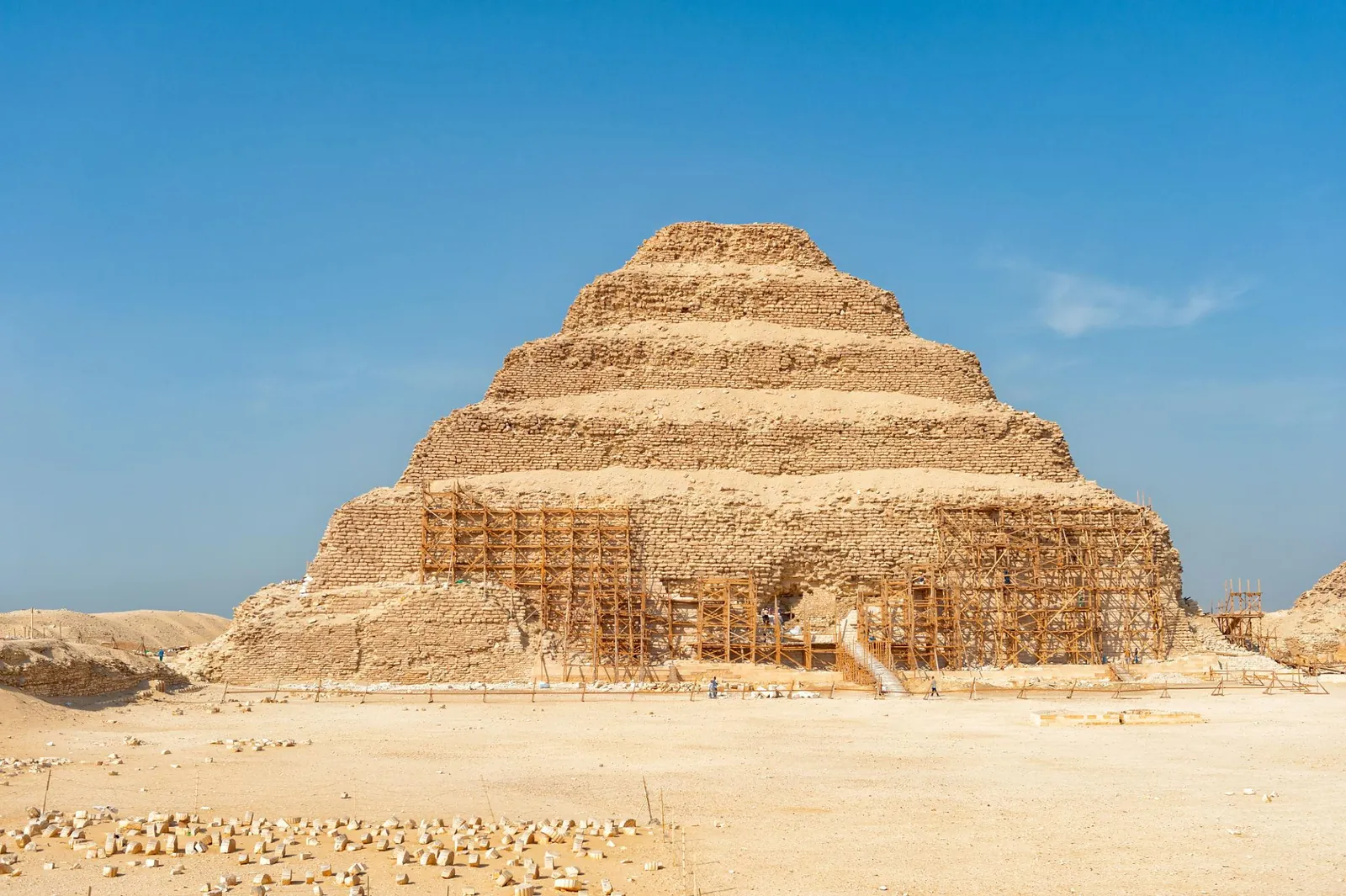
Around 2670 BC, the architect Imhotep built a tomb for King Djoser by stacking six stone platforms on top of one another. The result, the Step Pyramid, is the oldest pyramid in Egypt and one of the earliest large stone buildings in the world. It stands inside a walled complex with a grand entrance colonnade and courtyards used for royal ceremonies. Saqqara remained the burial ground of Memphis for about 3,000 years, and new discoveries are still announced there almost every year.
Memphis: Egypt's First Capital
According to tradition, King Menes founded Memphis around 3100 BC when he united Upper and Lower Egypt, and it remained one of the country's most important cities for thousands of years. Little of the ancient city survives above ground today, but the open-air museum at Mit Rahina keeps two of its treasures: a colossal limestone statue of Ramses II, now lying on its back so you can see the fine detail of his face, and the Alabaster Sphinx, the largest calcite statue ever found in Egypt.
Dahshur: The Bent and Red Pyramids
At Dahshur, King Sneferu, the father of Khufu, tried twice to build a true pyramid. The Bent Pyramid changes angle halfway up, most likely because the builders realized the original slope was too steep to be stable. The Red Pyramid, named for the reddish tone of its stone, got it right: it is the first successful smooth-sided pyramid and the model for the Great Pyramid at Giza. When it is open, you can climb down a long, low passage into its burial chambers — a memorable experience if you are comfortable in tight spaces.
Practical Tips
- Entrance tickets for the three sites are paid separately. Bring a bank card as well as some cash, and your guide will help at each ticket office.
- Wear comfortable shoes and a hat; the sites are open and sunny. Bottled water is provided during the tour.
- Lunch is optional — add it when booking and the tour stops at a local restaurant on the way back.
- Allow six to eight hours in total, including pickup and drop-off at your hotel in Cairo or Giza.
- Photography is welcome outdoors at all three sites, and Dahshur's open desert setting is especially photogenic.
- You will be back at your hotel with time to rest before an evening Nile dinner cruise, a relaxing way to end the day.
Pair It With Giza and the GEM
This trip works best alongside a day at Giza. See the finished masterpieces on the Giza Pyramids and Saqqara tour or the Grand Egyptian Museum and Pyramids tour, where many objects from these same sites are on display. Our Cairo travel guide helps you plan the rest of your stay.
Tour Itinerary
Three sites, in the order the pyramids were actually built. Six to eight hours from your hotel and back.
Your Egyptologist collects you from your hotel by private car for the drive south, away from the Giza crowds and into the older half of the pyramid story.
Six stone mastabas stacked on one another, built for King Djoser by his architect Imhotep. It is the oldest stone building of its size in the world, and the moment Egyptian builders stopped working in mud brick. The enclosure around it is worth as much time as the pyramid.
Almost nothing stands of the city that ruled Egypt for over a thousand years, but two things survive in the open-air museum: the colossal statue of Ramses II, now lying on its back in a building of its own, and the Alabaster Sphinx carved from a single block.
Two pyramids by the same king, Sneferu, a few years apart. On the Bent Pyramid the angle changes partway up, where the builders realised it was too steep. The Red Pyramid beside it is the first true smooth-sided pyramid anywhere, and you can walk down inside it.
If you chose lunch when booking, the tour stops at a local restaurant on the way back. Entrance tickets to the three sites are paid separately - the price covers your guide, the private car, pickup and drop-off and bottled water.
Your Travel Pass
Everything you need to know about what's covered and what to plan separately, presented like your boarding pass.
Paid
★
Your
Own
Frequently Asked Questions
Quick answers about this trip. For anything else, message us on WhatsApp — we reply fast.
Six to eight hours, with pick-up and drop-off at your hotel in Cairo or Giza by private air-conditioned vehicle.
The Step Pyramid of King Djoser at Saqqara, the colossal statue of Ramses II and the Alabaster Sphinx at Memphis, and the Bent and Red Pyramids at Dahshur.
They show how pyramid building began and developed before Giza — from Djoser's Step Pyramid to the Bent and Red Pyramids at Dahshur.
No. Entrance tickets to the archaeological sites are paid separately; the price covers a professional English-speaking tour guide, private transport, pick-up and drop-off, bottled water and assistance before and during the trip.
Lunch is optional: if you choose it when booking, the tour stops at a local restaurant on the way back. Otherwise meals are not included.


