

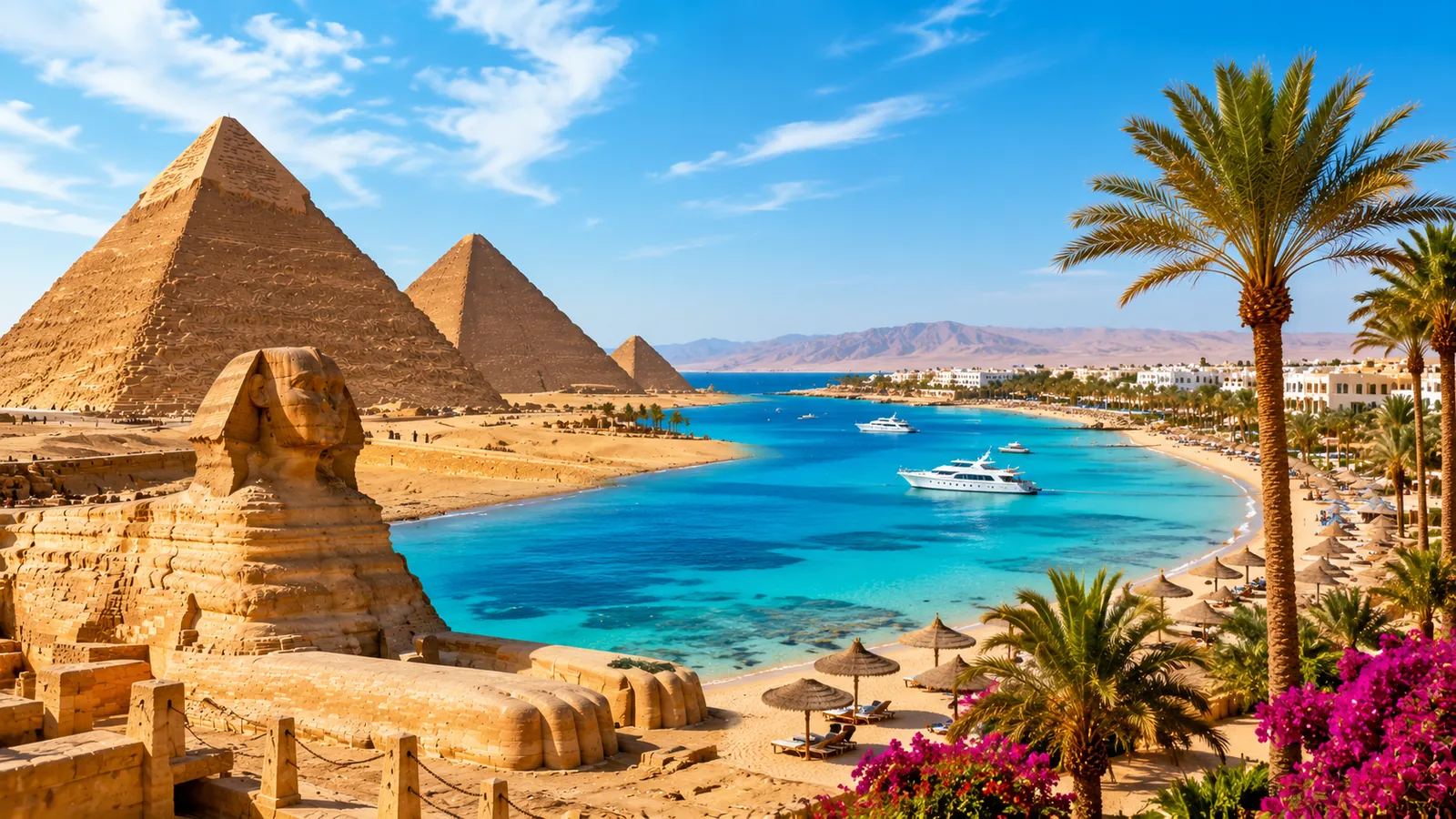
Tour Overview
The 8 Days Cairo, Abu Simbel, Luxor & Hurghada Tour combines Egypt’s most iconic historical attractions with the relaxing beauty of the Red Sea. Travelers explore Cairo’s ancient wonders, discover the majestic temples of Abu Simbel and Luxor, then enjoy snorkeling and desert adventures in Hurghada.
Tour Highlights
- Giza Attractions: Giza Pyramids Complex, The Great Sphinx, Valley Temple, Grand Egyptian Museum (GEM), Saqqara Step Pyramid.
- Cairo Attractions: The Egyptian Museum, Hanging Church, Amr Ibn Al Aas Mosque, National Museum of Egyptian Civilization, Khan El Khalili Bazaar.
- Upper Egypt Attractions: Abu Simbel Temples, Karnak Temple, Valley of the Kings, Hatshepsut Temple, Colossi of Memnon.
- Hurghada Experiences: Red Sea snorkeling trip, quad biking safari, beach relaxation, marine activities.
Tour Route
Who Is This 8-Day Tour For?
This tour suits first-time visitors who want the pyramids, Abu Simbel, Luxor and a few days on the Red Sea in a single week. It covers the whole length of the country by plane, train and road, then ends with three nights in a 5-star Hurghada resort. You stay in hotels throughout, so there is no Nile cruise in this program.
Hotels have advantages: a bigger room, a fixed bed each night and no ship schedule to follow. If you would rather sail between Aswan and Luxor, the 12-day Egypt tour includes a 3-night Nile cruise. If you only want Cairo and the beach, the 7-day Cairo and Hurghada holiday skips Upper Egypt.
How the Route Fits Together
Egypt is long and narrow, and the main sights lie along the Nile, so the tour moves in a single line from north to south and then across to the coast. Each leg uses the most practical transport.
- Cairo to Aswan: a domestic flight on the morning of day 3, which saves a long journey by land.
- Aswan to Abu Simbel: about 280 km each way through the Western Desert by private vehicle, the same day.
- Aswan to Luxor: a first-class train along the Nile Valley on day 4, with farmland, palm groves and villages outside the window.
- Luxor to Hurghada: a drive east across the Eastern Desert to the Red Sea coast on the afternoon of day 5.
- Hurghada to Cairo: a domestic flight on day 8 to connect with your international departure.
Pace: The Busiest Days and How to Prepare
Days 3 and 5 are the longest of the trip. Day 3 combines a morning flight with the round trip to Abu Simbel, about three to three and a half hours each way, so expect to be on the move from early morning until evening. Day 5 starts on the West Bank in Luxor and ends with the drive to Hurghada.
- Sleep early on days 2 and 4, and keep a small day bag with water, a hat and sunscreen within reach.
- Wear comfortable shoes: Giza, Saqqara and the Valley of the Kings all involve walking on sand and uneven ground.
- Book your flight home from Cairo for later in the day on day 8, since you first fly in from Hurghada.
- Days 6 and 7 in Hurghada are deliberately lighter, with a snorkeling trip and a quad bike safari, and plenty of time at the resort.
Abu Simbel and Luxor: Why They Are Worth the Effort
Abu Simbel is one of the main reasons to travel to the far south. Ramses II carved two temples into the sandstone cliffs in the 13th century BC, one for himself and one for his queen Nefertari, and the four 20-meter statues of the king on the Great Temple facade are among the most famous images of ancient Egypt. In the 1960s both temples were cut into blocks and moved to higher ground in a UNESCO project, to save them from the waters of Lake Nasser.
Luxor, the site of ancient Thebes, gives you the other half of the story. Karnak, built and expanded over some 2,000 years, is the largest temple complex in Egypt, while the West Bank holds the royal tombs of the Valley of the Kings and the terraced temple of Hatshepsut, one of the few women to rule Egypt as pharaoh.
Best Time to Go and How Prices Work
October to April is the most comfortable season for sightseeing in Cairo, Aswan and Luxor. From May to September the tour starts at its lowest price, $1,740 per person for groups of 9 to 16, but Aswan and Luxor often pass 40°C in summer; the upside is that the Red Sea is at its warmest. From October to mid-December the price starts at $1,980, and the Christmas and New Year period is the most expensive, from $2,330. Couples and small groups of 2 to 4 pay more per person, and solo travelers pay the single rate shown in the price table.
What to Budget For
- Visa: many nationalities can get a visa on arrival or apply online through Egypt's official e-visa portal. Check the rules for your passport before you travel.
- Meals: breakfast is included daily from day 2, with lunch on the sightseeing and snorkeling days and dinner on the safari day. Budget for the other dinners.
- Tips and personal expenses: these are not included, so keep small notes in Egyptian pounds for guides, drivers and boat crews.
- Planning help: our Cairo travel guide has ideas for your free afternoon on arrival day.
Day-by-Day Itinerary
Cairo, Aswan, Luxor and the Red Sea without a cruise: you stay in hotels and take the first-class train down the valley.
Met inside the airport and driven to your five-star hotel. First of two nights in Cairo, with the rest of the day free after the flight.
Giza first, while the plateau is still cool: the pyramids of Khufu, Khafre and Menkaure, the Great Sphinx and the Valley Temple. Then south to Saqqara for Djoser's Step Pyramid, and the Grand Egyptian Museum, where the Tutankhamun collection is shown together in one place.
The morning flight south, then the drive through the Western Desert to Abu Simbel for the two rock-cut temples of Ramses II and Nefertari. Aswan's own landmarks afterwards, and the night in Aswan.
The train down the valley from Aswan to Luxor, with the Nile and the farmland on one side most of the way. Karnak in the afternoon, and the night in Luxor.
The Valley of the Kings, Hatshepsut Temple and the Colossi of Memnon in the morning, then the drive east across the desert to Hurghada. First of three nights.
A snorkelling boat trip on the Red Sea with stops over the coral, lunch on board and time in the water. Gear is provided.
A quad bike safari into the desert behind the coast, with a Bedouin camp and the light going gold on the way back.
Breakfast, the transfer to Hurghada airport and the flight to Cairo for your onward departure.
Your Travel Pass
Everything you need to know about what's covered and what to plan separately, presented like your boarding pass.
Paid
★
Your
Own
Frequently Asked Questions
Quick answers about this trip. For anything else, message us on WhatsApp — we reply fast.
Seven nights in 5-star hotels (2 in Cairo, 1 in Aswan, 1 in Luxor, 3 in Hurghada), flights Cairo-Aswan and Hurghada-Cairo, a first-class train from Aswan to Luxor, private transport, an Egyptologist guide, entrance fees, a snorkeling trip and a quad bike safari. International airfare, the visa and tips are extra.
No. You stay in hotels in Aswan and Luxor and travel between them by first-class train. If you would like to sail the Nile, the 12-day tour includes a 3-night cruise.
On day 3, right after the flight to Aswan: the temples of Ramses II and Queen Nefertari, plus Aswan's landmarks.
By private air-conditioned vehicle on day 5, after the Valley of the Kings, Hatshepsut Temple and the Colossi of Memnon.
Breakfast daily from day 2, lunch on the sightseeing and snorkeling days, and dinner on the desert safari day. No meals are included on arrival day.