Tour Overview
Two days, two of Egypt's most famous sites: this private trip from Marsa Alam crosses the Eastern Desert by car to Luxor for the Valley of the Kings, Hatshepsut Temple, the Colossi of Memnon and Karnak. In the evening the first-class train carries you south to Aswan for a night in a 5-star hotel. On day two you leave early with a breakfast box for the temples of Ramesses II at Abu Simbel, have lunch back in Aswan and travel home to the coast.
Tour Highlights
- Pair the tombs and temples of ancient Thebes with Abu Simbel in one private trip, with a private Egyptologist guide on both days.
- Go underground in the Valley of the Kings, where the New Kingdom pharaohs, Tutankhamun among them, were buried in painted rock-cut tombs.
- See Queen Hatshepsut's terraced temple against the cliffs of Deir el-Bahari and the two seated colossi of Amenhotep III on the West Bank.
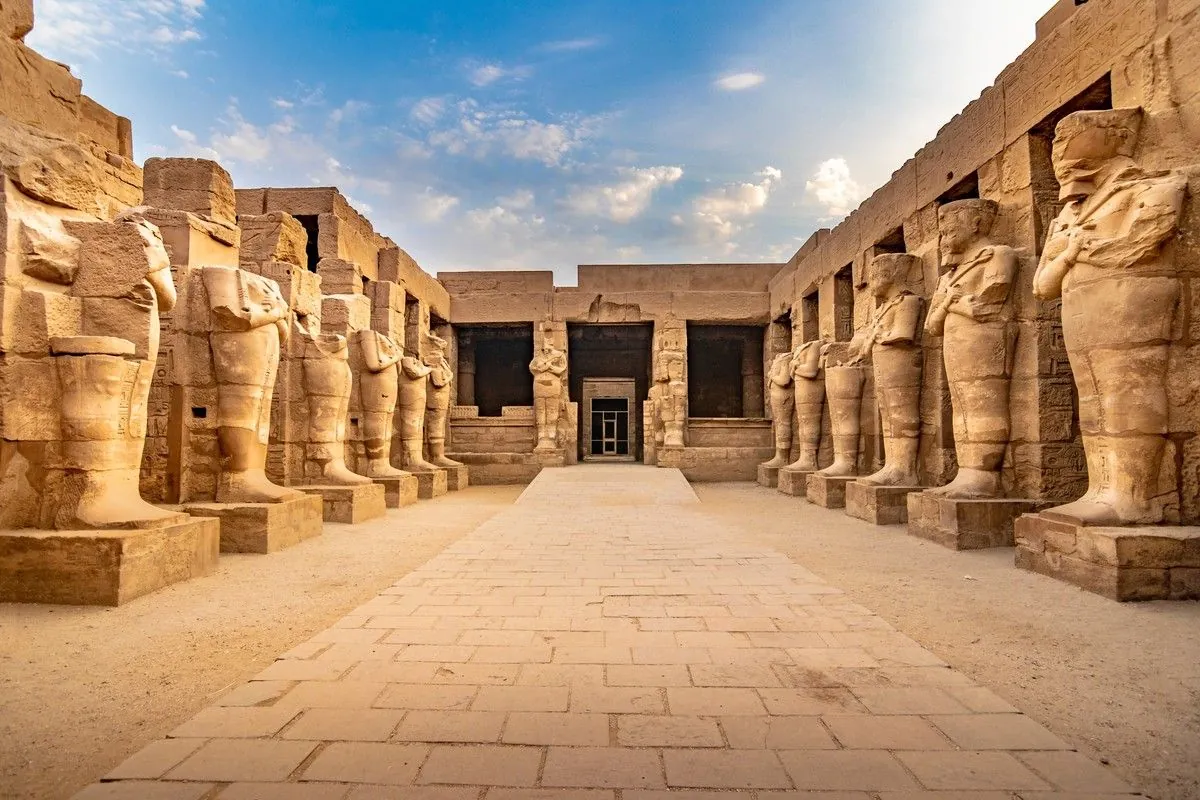
- Walk among the giant papyrus columns of Karnak's hypostyle hall, then ride the first-class train along the Nile to Aswan for the night.
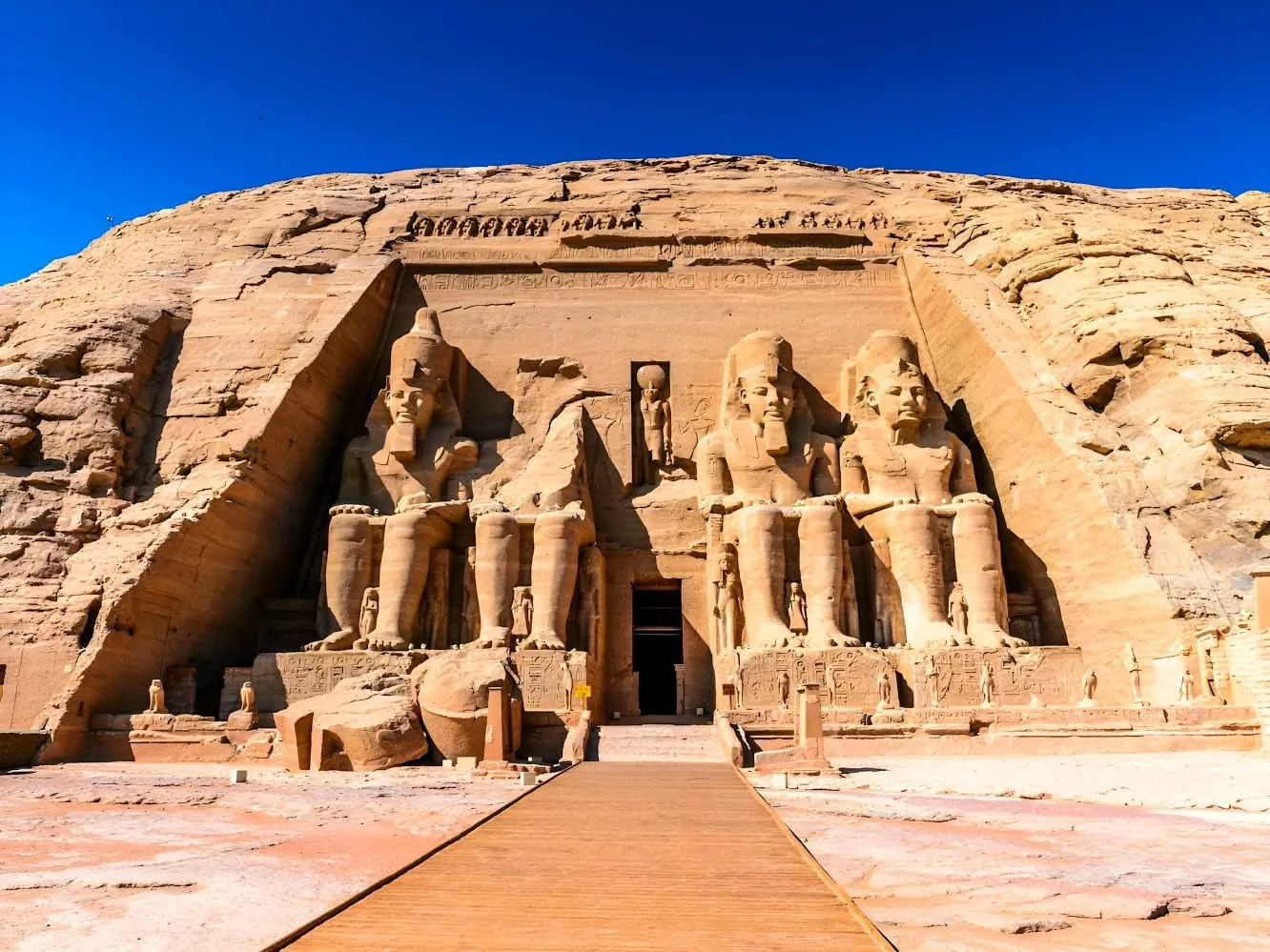
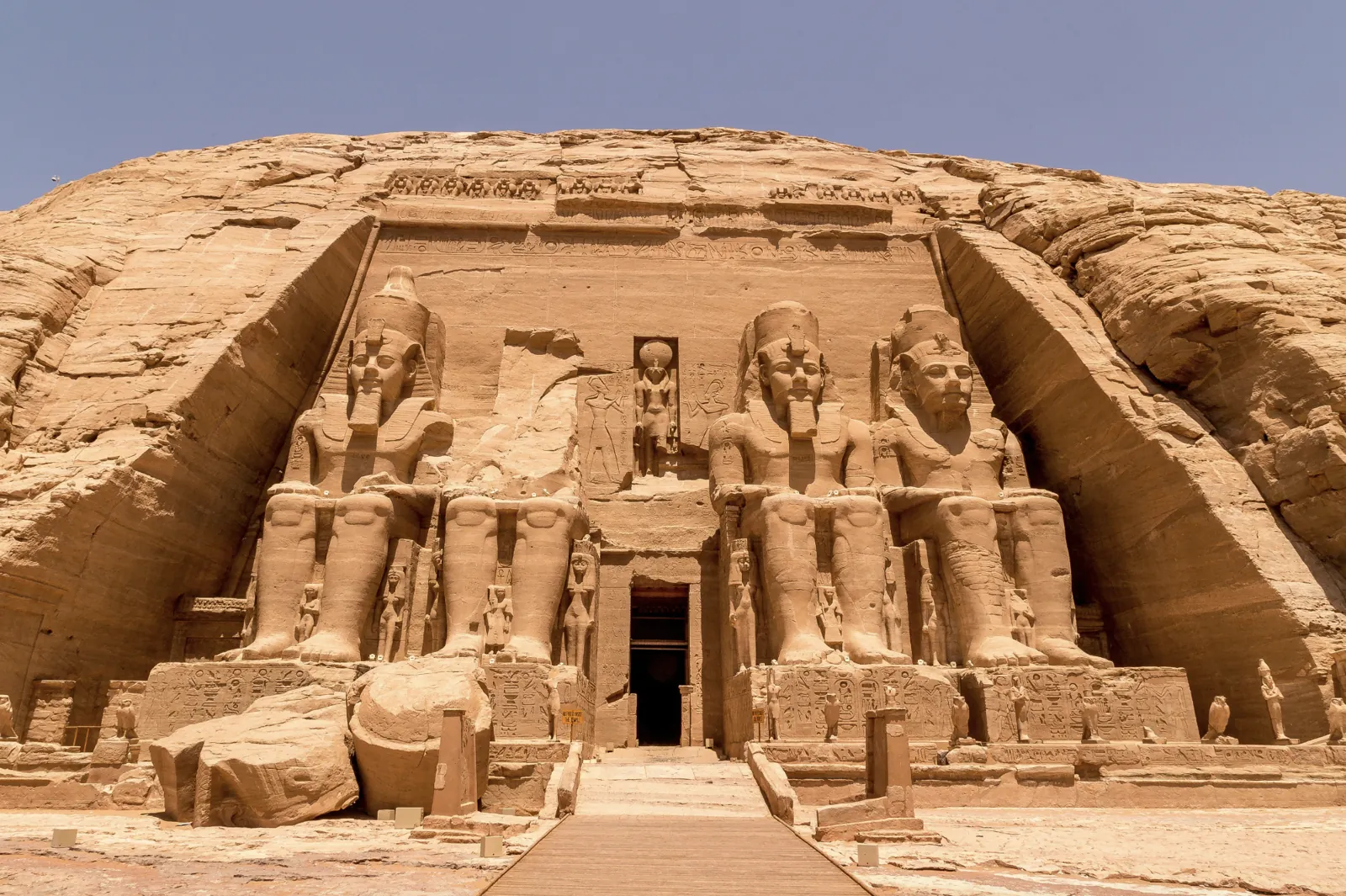
- Face the four 20-meter statues of Ramesses II at Abu Simbel and the smaller temple he dedicated to Queen Nefertari and the goddess Hathor.
Tour Route
Is 2 days enough for Luxor and Abu Simbel from Marsa Alam?
It is enough for the headline sites, but it is a full two days. You see the Valley of the Kings, Hatshepsut Temple, the Colossi of Memnon, Karnak and both Abu Simbel temples. You do not see Luxor Temple or Aswan's own sights such as Philae, so choose this trip if Abu Simbel is your priority.
How do you travel between Marsa Alam, Luxor and Aswan?
The trip mixes road and rail. A private car takes you from Marsa Alam to Luxor, the first-class train carries you from Luxor to Aswan, and your guide takes you from Aswan to Abu Simbel and back. For the return, the price includes a train ticket back north, and a private car completes the drive to Marsa Alam.
Why is Abu Simbel worth the early start?
Few monuments in Egypt match its scale. The facade of the Great Temple is cut straight from the cliff, and in the 1960s both temples were sawn into blocks and rebuilt higher up so the waters of Lake Nasser would not drown them, one of UNESCO's best-known rescue projects.
Around February 22 and October 22 each year, the rising sun reaches the inner sanctuary and lights three of its four seated statues. If your dates fall near either day, tell us when you book, as the site is much busier.
How is this different from the other 2-day trips from Marsa Alam?
Day one here matches the 2-day Luxor and Aswan trip, but that trip spends day two at the High Dam, the Unfinished Obelisk and Philae instead of Abu Simbel. The 2-day Aswan and Abu Simbel trip skips Luxor and drives straight to Aswan.
If you also want the Pyramids, the 3-day Cairo, Luxor and Abu Simbel trip keeps this route and adds a flight to Cairo and a night there. Staying longer in the south? Our Aswan day tours cover felucca sails and Nubian villages.
Tour Itinerary
Expect two full days: the first combines a desert drive, four Luxor sites and an evening train, and the second starts before sunrise for Abu Simbel before the long trip home.
A private, modern air-conditioned car picks you up at your hotel in Marsa Alam and heads inland across the Eastern Desert toward the Nile Valley. In Luxor you meet your private Egyptologist guide, who stays with you for the sightseeing, and you start on the West Bank.
For about five centuries the kings of Egypt's New Kingdom were buried in this dry valley, in tombs cut deep into the hillside and covered with scenes from the books of the afterlife. Around 63 tombs are known; your entry ticket lets you inside a selection of them, and your guide explains what the paintings mean.
Hatshepsut ruled as pharaoh in the 15th century BC, and her mortuary temple at Deir el-Bahari rises in wide terraces below the cliffs. On the way back toward the river you stop at the Colossi of Memnon, two enormous seated figures of Amenhotep III that once guarded his vanished temple.
Lunch is included at an oriental-style restaurant overlooking the Nile. It gives you a proper rest between the West Bank and the afternoon at Karnak, and a chance to try Egyptian dishes before the train journey later in the day.
Karnak was the great temple of Amun, built and enlarged by one ruler after another for some two thousand years. Your guide leads you through its pylons into the hypostyle hall of 134 columns, past the obelisks of Thutmose I and Hatshepsut, and out to the sacred lake.
After Karnak you are driven to Luxor station for the first-class train south. When you reach Aswan, one of our representatives meets you and takes you to your 5-star hotel for the night. Get to bed early, because the morning start is a very early one.
The hotel prepares a breakfast box for you, and you set off with your private guide for Abu Simbel, deep in Nubia on the western shore of Lake Nasser, not far from the border with Sudan. Your guide uses the journey to explain the history of the region.
Ramesses II had two temples carved out of the sandstone cliff here. The Great Temple honors the king with the gods Amun, Ra-Horakhty and Ptah, and its walls show his campaign at Kadesh. The smaller temple is dedicated to Hathor and to Queen Nefertari, who appears at the same size as her husband.
Back in Aswan, lunch is included before you start home. The price covers the train ticket back north as well as the outbound one, and a private air-conditioned car then takes you across the desert to your hotel in Marsa Alam, where the trip ends.
What's Included
What the tour price covers, and what to plan for separately.
Paid
★
Your
Own
Frequently Asked Questions
Quick answers about this tour. For anything else, message us on WhatsApp — we reply fast.
It starts at your hotel in Marsa Alam, where our private car picks you up on the morning of day one for the drive to Luxor. It ends back at the same hotel on day two, after lunch in Aswan, the train journey north and the final road transfer to the coast.
The price includes train tickets from Luxor to Aswan and back, one night in a 5-star hotel in Aswan, a breakfast box and two lunches, a private Egyptologist guide on both days, air-conditioned transfers, entrance fees to all sites in the program, and taxes. Dinner, drinks and tips are extra.
Yes. Your guide and car are reserved for you and the people you travel with. The per-person price falls as your group grows, because the guide, car and transfer costs are split between more people, and it changes by season, with higher hotel and train costs in winter and over the holidays.
Bring just one small overnight bag, since you change hotels and travel by car and train. Add your passport, comfortable walking shoes, a hat, sunscreen and a refillable water bottle. A warm layer helps on winter mornings at Abu Simbel.
Yes. Avicon Travel is a Class "A" travel agency licensed by the Egyptian Ministry of Tourism under License No. 1962 and registered since 2010. Our office and team are in Karnak, Luxor, so the guides, drivers and cars on this tour are our own local team, not a booking desk abroad.